跳到内容
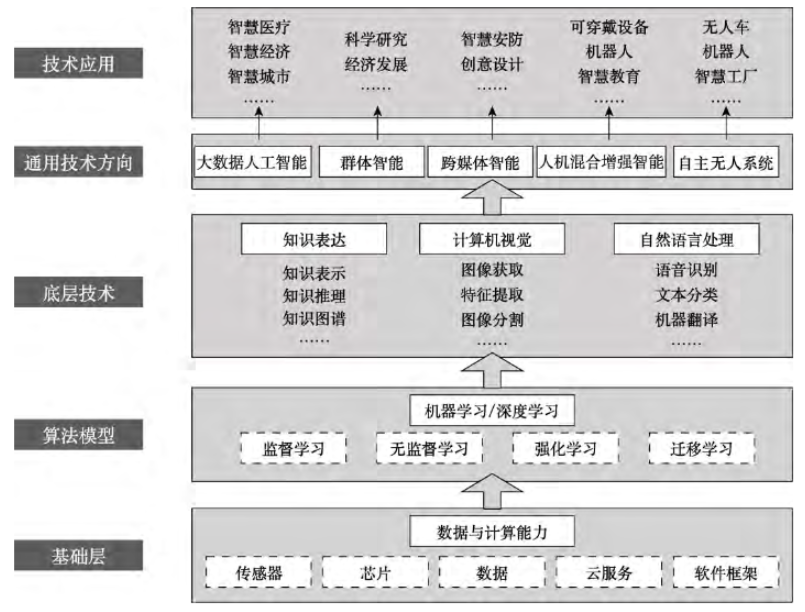 In the era of a new generation of artificial intelligence, this work aims to analyze and identify the characteristics and value of artificial intelligence products and service systems, indicates the future development trends, and provides references for related design, technology and application research. Starting from the concept of artificial intelligence (AI), the concepts of AI products and service systems is defined in this paper. Typical AI products and related re- search are reviewed and analyzed, and the key features and supporting technologies of artificial intelligence products are summarized. Then, this paper explores the typical service scenarios of AI products and reviews the current status of relevant research. Finally, the future trends and challenges are predict based on the previous analysis. This paper indicates that the typical characteristics of AI products include context awareness, adaptive learning, autonomous decision-making, proactive interaction and collaboration. Framework of supporting technologies of AI products is described, that data and computing power as base, algorithms as core, and multiple underlying technologies and general technologies supporting applications in various scenarios. The value that the service system of AI products can bring is analyzed in different scenarios. The future trends are predicted as the transformation from tech-driven to design driven, and the switch of perspective from single AI product to service system.
[......]
In the era of a new generation of artificial intelligence, this work aims to analyze and identify the characteristics and value of artificial intelligence products and service systems, indicates the future development trends, and provides references for related design, technology and application research. Starting from the concept of artificial intelligence (AI), the concepts of AI products and service systems is defined in this paper. Typical AI products and related re- search are reviewed and analyzed, and the key features and supporting technologies of artificial intelligence products are summarized. Then, this paper explores the typical service scenarios of AI products and reviews the current status of relevant research. Finally, the future trends and challenges are predict based on the previous analysis. This paper indicates that the typical characteristics of AI products include context awareness, adaptive learning, autonomous decision-making, proactive interaction and collaboration. Framework of supporting technologies of AI products is described, that data and computing power as base, algorithms as core, and multiple underlying technologies and general technologies supporting applications in various scenarios. The value that the service system of AI products can bring is analyzed in different scenarios. The future trends are predicted as the transformation from tech-driven to design driven, and the switch of perspective from single AI product to service system.
[......]继续阅读
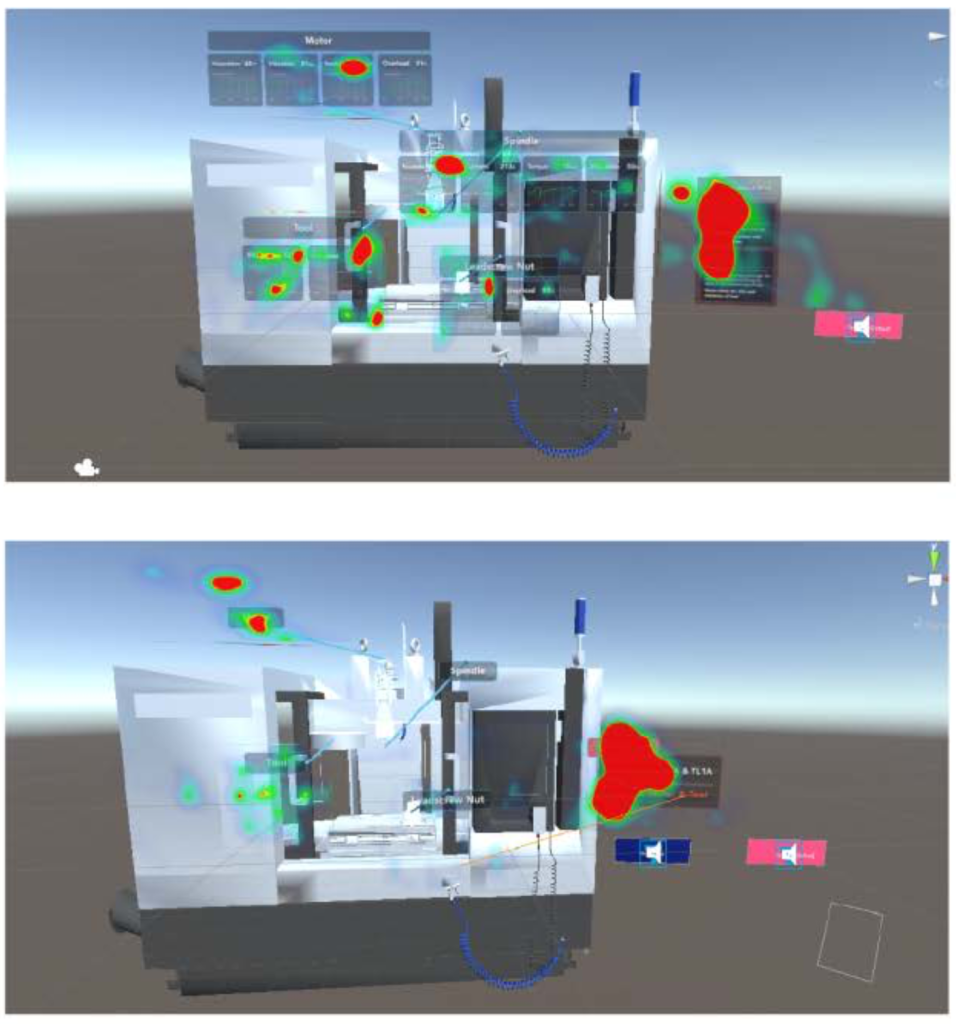 Mixed reality (MR) devices blur the boundaries between the virtual world and reality, reshaping the way people work with assistive information. However, there are still strong lim-for information searching tasks in MR glasses. Added capabilities of HoloLens 2, a recently released MR device, bring new possibilities to deal with these issues. Interactive approaches are proposed in this study, including body/hand-locked components , view-locked navigation components, and view-sensitive information layout. Prototypes were developed with and without these interactive approaches, and user studies were conducted to measure the task performance, usability, and presence. Results show that interactive approaches have positive effect in terms of task completion time. Different cognitive and behavioral styles may lead to distinct preferences for different interactive approaches.[......]
继续阅读
 设计说明: 在这个数据过载的时代, 信息可视化如同天文学家的望远镜和生物学家的显微镜, 是将数据处理成易于人脑理解和吸收形式的工具. 我们接触到的数据, 常常是每个数据项具有两个以上属性值的高维数据; 而我们常用的纸媒和屏幕, 只有物理上的两个显示信息的维度, 对于高维数据的呈现有着一定局限性.[......]
继续阅读
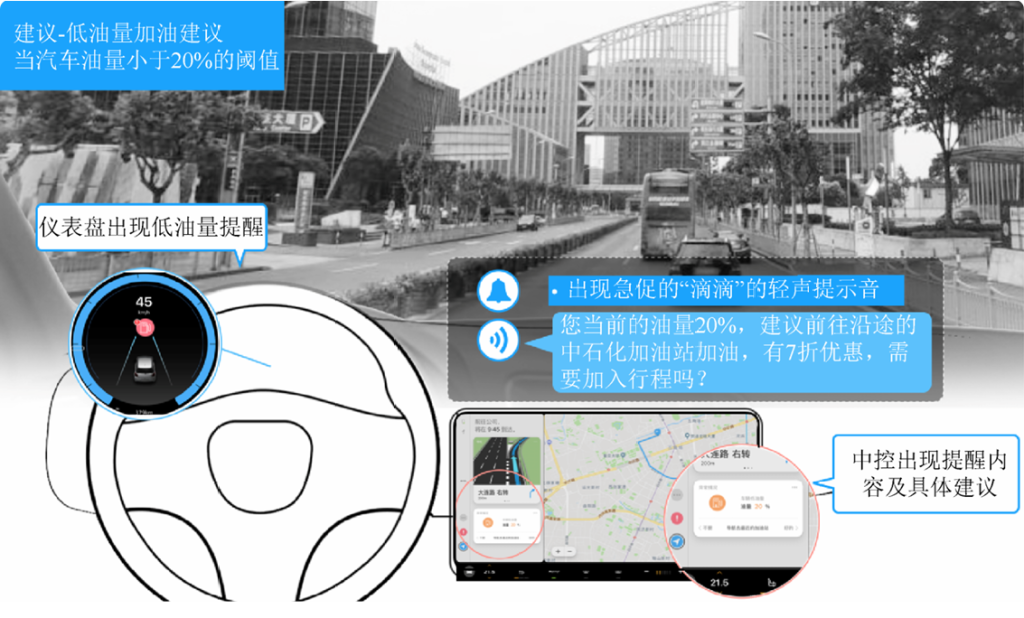 通过引入主动式 HMI,车辆可以预测用户的意图并启动功能,从而减少干扰,增强灵性,提高驾驶安全性和用户体验。通过主动式 HMI,使用意图预测模型的准确性机制层面成为影响主动HMI体验质量的关键。然而,缺乏有效的手段来提高用户预测模型的准确性,并且相关研究还不够充分。智能交互是提高工作效率的有效方法机器人的性能。通过将该技术引入到主动响应式的设计中通过交互,可以获得用户的意图,有助于突破当前算法的瓶颈。提出一种基于智能的汽车主动响应式交互设计框架交互并利用智能交互提高预测精度,是预测的关键点还列出了值得关注的地方,并举例说明了具体的设计案例。[......]
继续阅读
 In this paper, we propose a vision-based hand gesture recognition system for human-computer interaction. The gesture recognition systems are employed in developing a rock-paper-scissors game between human and our robotic hands in realtime. Our task is to predict the gestures as soon as possible by using high-speed cameras. Due to the computational complexity, the standard long-term recurrent convolution network-based action classification system cannot be contented with classification tasks based on high-speed cameras. We propose to address this issue by employing a more efficient network architecture and using a threshold-based method to predict the gesture in advance. We validate our proposed method on the new gesture dataset for the rock-paper-scissors game. The model is able to successfully learn gestures varying in duration and complexity. A comparative analysis of CNN and long-term recurrent convolution network is performed. We report a gesture classification accuracy of 97% and report a near real-time computational complexity of 7 ms per frame.[......]
继续阅读
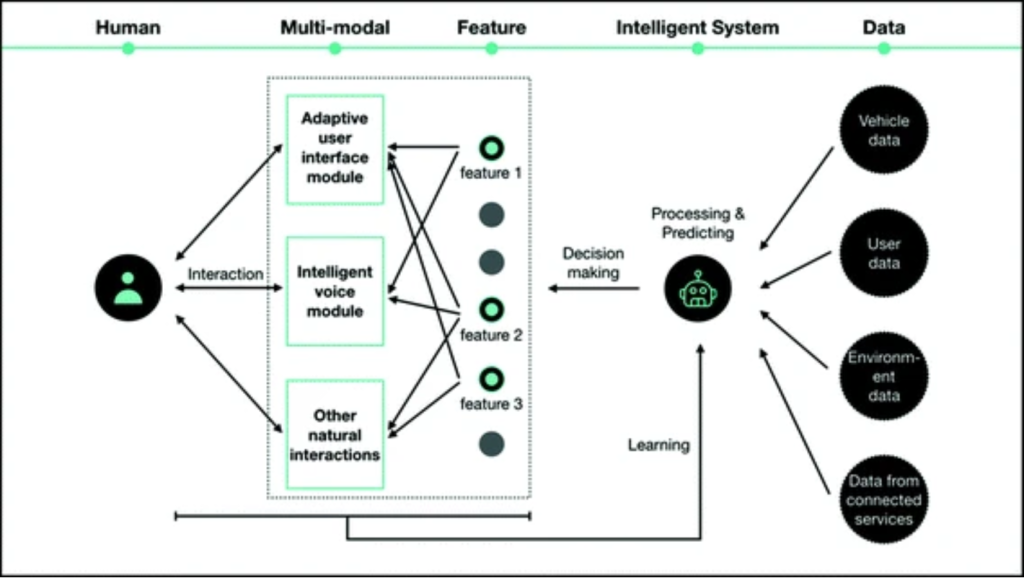 HMI is used to refer to human-vehicle interaction design from the perspective of taking car as a machine. However, with the quick increase of demand for smart cockpit, it would put strong constraints to the design of intelligent interactions and connected services if we still design from the perspective of control-oriented interface with a machine. By switching the concept from Human Machine Interaction (HMI) to Human Robot Interaction (HRI) can instead greatly open up the space of innovation for the development of natural interactions with the car as an intelligent system. This also make it possible to further focus on topics such as adaptive learning of the system through smart interaction. Designing from the perspective of human robot interaction is even more important for autonomous vehicles, which can provide to users a more consistent intelligent experience from driving control to in-vehicle functions and connected services. we introduce in this paper our approach in designing human-vehicle interaction from the HRI perspective, which is further composed of three parts: the intelligent sensing, predicting, and decision-making module, the adaptive user interface module, and the intelligent voice module.[......]
继续阅读