跳到内容
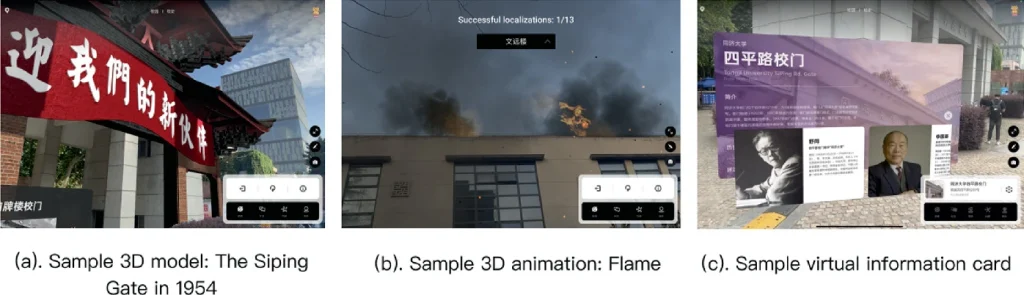 Visualizing the past and engaging learners in real-world learning contexts is important for history learning. Location-based Augmented reality (AR) technologies offer new possibilities for supporting place-based learning, by tracking users’ position and superimposing layers of visual information on the real world. This paper presents a location-based AR application TongSEE that enables users to learn history in authentic context. We describe the design approaches of the interface, physical interaction, and contextual guidance of the application. Twenty participants were evaluated using the application. The results show that, in general, TongSEE is a promising educational tool that helps learners better understand the history and increase their interest in history learning. Our study contributes insights into how location-based AR technologies could be designed to support place-based learning and users’ perspective on this learning method.[......]
继续阅读
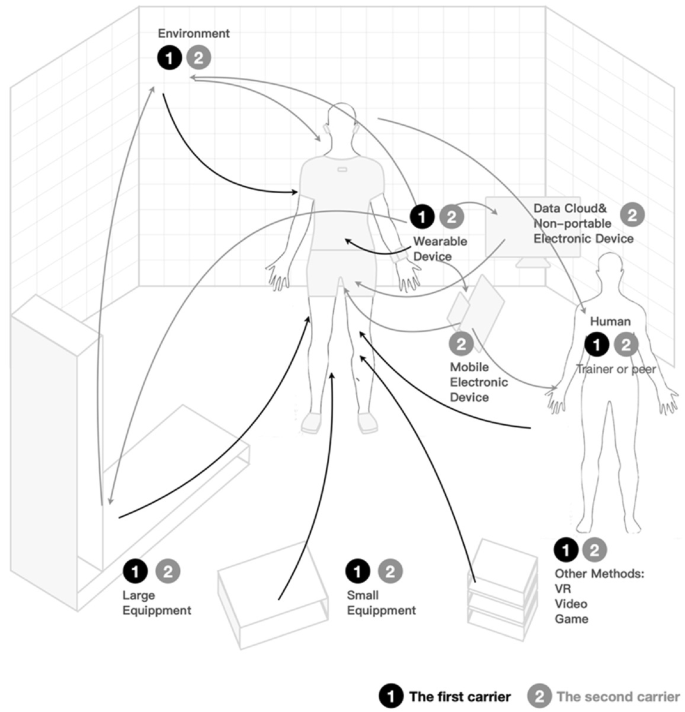 In this article, we focus on fitness workout scenarios. To examine the current practices, we first conducted a substantial user research, through the content analysis procedure we summarized insights regarding fitness purpose, essential data, psychological state, emotional changes and social habits. Subsequently, we generalized related design opportunities of improving the fitness experience and motivation to enhance the fitness performance and communication. Feedback and data representation have great potential to address the challenges, therefore we first proposed a design process for the feedback mode design of fitness workout, including the contextual information, feedback strategy, and realization ways. The feedback designs are implemented on a wearable augmented feedback system ‘FitSleeve’, focusing on individual and group scenarios separately. In group sessions, FitSleeve can demonstrate participants’ experience level, real-time heart rate zone and feedback regarding the correct movement execution. In individual sessions, FitSleeve can display the training progress and provide continuous encouragement. Finally, we evaluated FitSleeve by adopting the System Usability Scale, User Experience Questionnaire, Intrinsic Motivation Inventory and user subjective interviews. The findings indicate the potential of FitSleeve to improve the user experience and motivation of fitness participants.[......]
继续阅读
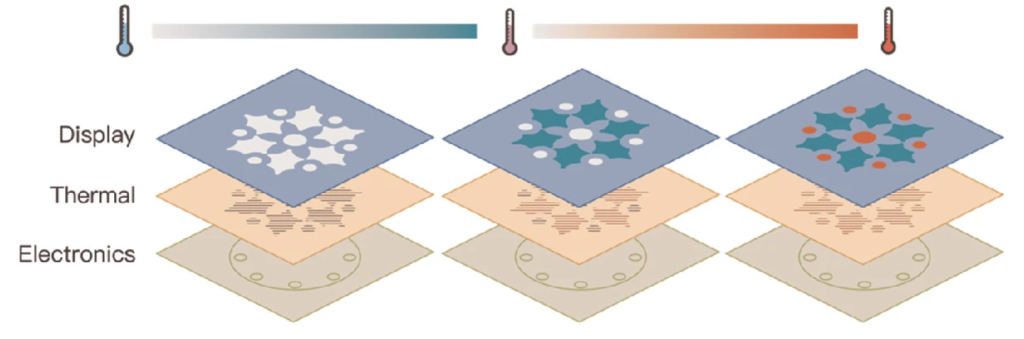 Smart textiles have attracted great attention from Human-Computer Interaction and this study explored how dynamic thermochromic textiles may contribute to the transmission and revitalization of textile Intangible Cultural Heritage (ICH). We proposed Seasons which is an interactive cheongsam developed as a novel exploration in traditional craftsmanship of Shanghai-style cheongsam and smart textiles. Seasons consists of animated visual patterns including 4 stages, new leaves sprout and flowers from buds to full bloom as demonstrations of spring and summer, while leaves turn yellow in autumn and snow comes in winter. Subsequently, we presented the implementation process, feedback from the inheritors of ICH and visitors in the exhibition. In conclusion, we explored how computational thermochromic patterns may enhance the aesthetic and expression in traditional clothing. There is a great design space for thermal-activated smart textiles and this paper is believed to contribute to the future development of smart textile applications for ICH.[......]
继续阅读
 Oracle bone script is an ancient form of writing character used by ancient Chinese. It takes advantage of static pictographic elements to shape scenes, thus conveying dynamic and prosperous messages. The purpose of this study is to demonstrate that scene-based icons inspired by the oracle bone script can be effectively recognized and understood by people from different cultures and thus used to help in cross-cultural communication scenarios. An experiment was conducted with a sample of 16 people from different cultural backgrounds to determine the icons’ recognizability. The result indicates that these icons have relatively high recognizability in a cross-cultural context.[......]
继续阅读
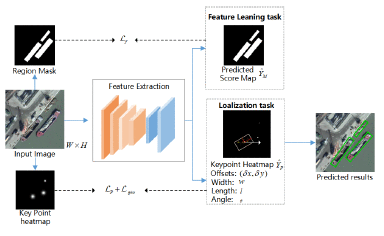 Accurate and efficient ship detection in remote sensing images still remains a challenging task due to the large variations of scales, orientations and distributions. In this paper, we propose an anchor-free ship detector that directly regresses ship localization parameters, offering a simpler pipeline over the previous methods. The detection network is then trained in a multi-task fashion which contains not only the ship center-point maps and oriented bounding boxes but the ship masks. Instead of fixing the weights among the multiple task losses, we adopt a curriculum learning strategy which gradually adapts the loss weights during the training process so that the network can learn the discriminative ship features at the early stage and obtain more localization information while training continues. Experimental results on real dataset demonstrate the effectiveness and efficiency of our proposed method.[......]
继续阅读
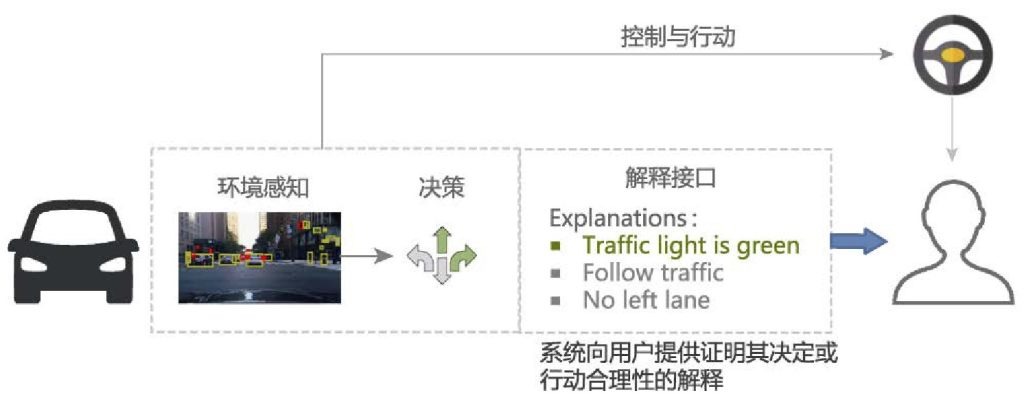 随着现代人工智能技术在自动驾驶系统中的广泛应用, 其可解释性问题日益凸显, 为此探讨人-无人车交互过程中的可解释性交互的框架以及设计要素等问题, 以增强自动驾驶系统的决策透明性, 安全性和用户信任度. 结合可解释人工智能和人机交互的基本理论与方法, 本文首先介绍了可解释性人工智能, 对当前可解释内容的提取方法进行总结, 然后以人-机器人交互的透明度模型为基础, 建立人-无人车交互中可解释性交互的框架. 最后从解释的对象, 方式和评价等多个设计维度对可解释性的交互设计问题进行探讨, 并结合案例进行分析. 可解释性作为人与模型决策之间的接口, 不仅仅是一个人工智能技术问题, 而且与人密切相关, 涉及到人-无人车交互中的多个层次. 本文提出人-无人车交互中可解释性交互的框架, 得出在人-无人车交互每个阶段需要的解释内容以及可解释交互设计的要素.[......]
继续阅读
 指出 “支持人在环路混合智能的交互设计” 这一类设计问题, 研究人在环路混合智能系统中交互设计的问题, 为相关设计, 技术与应用研究提供索引和参考. 从人在环路混合智能的概念和架构出发, 引出人在环路混合智能的交互设计; 基于对相关文献的整理, 总结常见界面构成和交互方式; 总结整理人在环路混合智能的生命周期. 指明了人在环路混合智能是需要用户交互的智能模型, 介绍了由用户, 人工智能算法, 用户接口构成的系统架构; 总结了针对不同数据类型的现有工作可能的交互方式; 分析了人在环路混合智能完整生命周期中的设计挑战, 根据现有文献提取关键界面构成, 提出了人在环路混合智能系统的设计建议; 提出了从智能系统, 用户, 设计师三方面建立设计方法论, 完善设计工具, 更有效地支持和推动人在环路混合智能系统的应用的建议.[......]
继续阅读
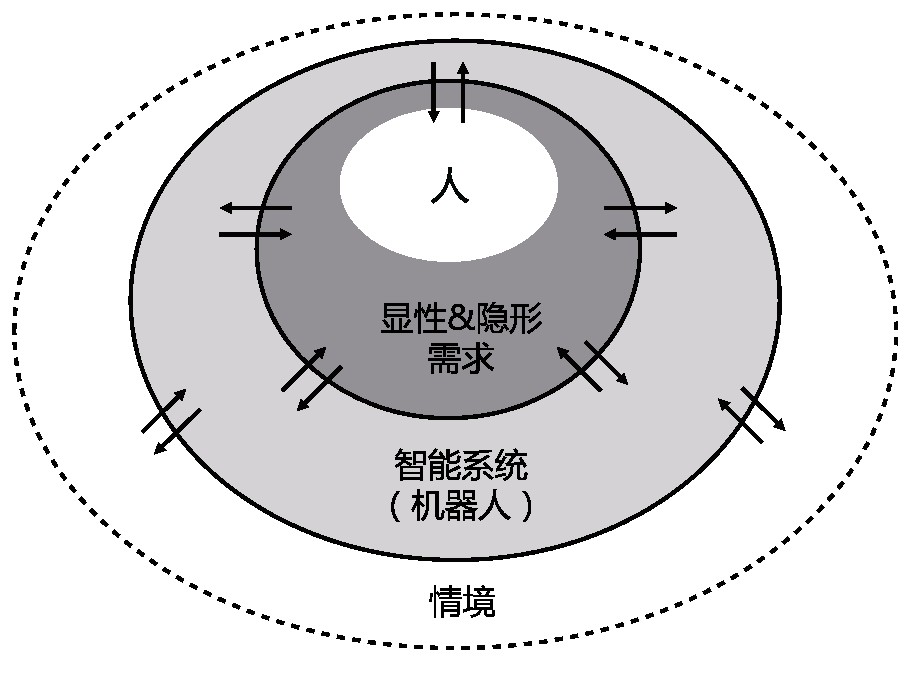 智能系统在智能制造、智慧城市、医疗健康、生活服务等各种场景中越来越广泛地存在,为应对人与智能系统的交互中所面临的诸多挑战,从技术和体验的视角分析人机智能协同中的关键问题。对从人机交互到人机智能协同的发展脉络与研究范围进行梳理,提出综合技术视角和体验视角的研究框架;从智能系统的特征出发,梳理出技术视角下人机智能协同所带来的新兴问题;从体验的视角探讨如何推动实现人机智能协同;在此基础上总结人机智能协同的发展趋势。总结了人机交互演进的三个阶段;提出了技术视角下人机智能协同的关键问题,包括人机能动性分配、动态学习和修正、情境自适应及主动响应模式;探讨了体验视角下人机智能协同的可解释性、信任问题、情感化及公平负责等问题;指出了人机智能协同全方位、多类型及体系化的发展趋势。[......]
继续阅读
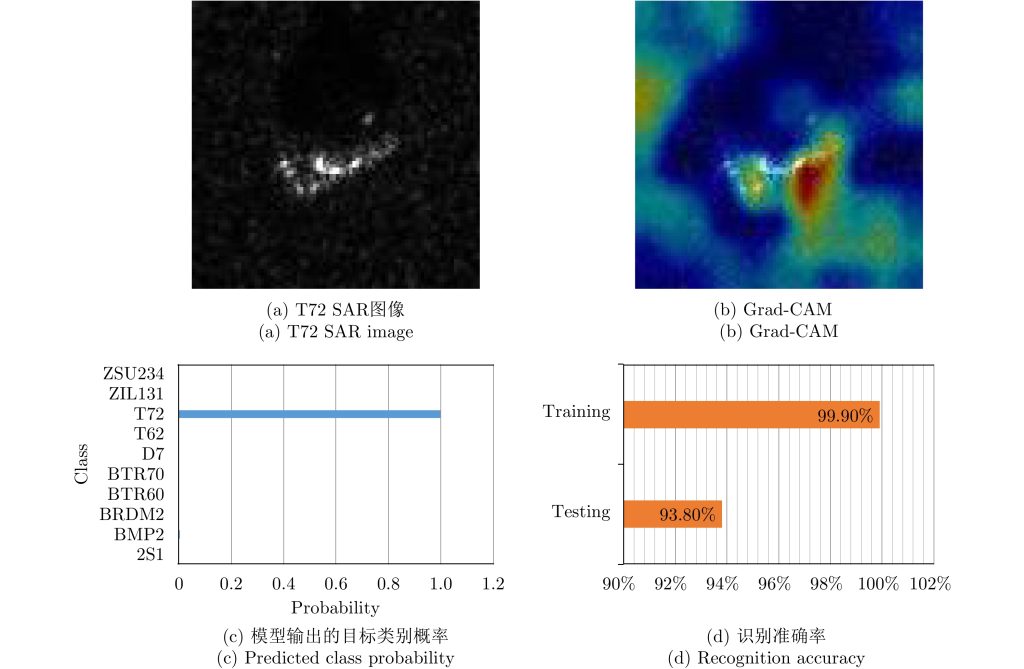 合成孔径雷达(SAR)图像目标识别是实现微波视觉的关键技术之一。尽管深度学习技术已被成功应用于解决SAR图像目标识别问题,并显著超越了传统方法的性能,但其内部工作机理不透明、解释性不足,成为制约SAR图像目标识别技术可靠和可信应用的瓶颈。深度学习的可解释性问题是目前人工智能领域的研究热点与难点,对于理解和信任模型决策至关重要。该文首先总结了当前SAR图像目标识别技术的研究进展和所面临的挑战,对目前深度学习可解释性问题的研究进展进行了梳理。在此基础上,从模型理解、模型诊断和模型改进等方面对SAR图像目标识别的可解释性问题进行了探讨。最后,以可解释性研究为切入点,从领域知识结合、人机协同和交互式学习等方面进一步讨论了未来突破SAR图像目标识别技术瓶颈有可能的方向。[......]
继续阅读
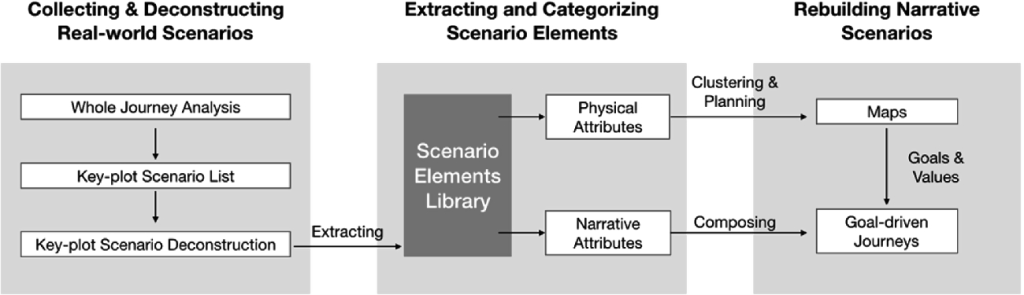 With the rapid development and application of autonomous vehicles, human-autonomous vehicle interaction (HAI) has recently gained importance. Simulation is an effective and efficient approach for the research and testing in the HAI domain, and scenarios are crucial to the validity and experience of HAI simulators. However, research on systematically building scenarios is still lacking. This paper proposes the concept of the narrative scenario in the HAI simulation, and a three-stage framework for building narrative scenarios is established. First, key-plot scenarios are collected from the whole journey analysis and deconstructed into elements. After extracted and categorized into a library, the physical and narrative attributes of scenario elements are defined. Finally, scenarios in simulators can be rebuilt in a narrative sequence driven by task goals.[......]
继续阅读