跳到内容
 Integrated speech and hand-motor training is an effective post-stroke rehabilitation method. However, few interactive systems and assistive technologies were developed in this field. Driven by this challenge, we leverage Mixed Reality technology, which merges immersive virtual scenarios with physical hands-on tools in the real world, to provide patients with multi-modal interactions and engaging training experiences. Following a user-centered design approach, we first interviewed seven therapists to identify user requirements and design considerations. We further designed MRehab, an interactive rehabilitation system that allows patients to regain speech and hand skills through MR scenarios that depict daily living activities. We conducted a preliminary user test with 12 patients and 5 therapists to validate the feasibility and understand the user experience with MRehab. The results confirmed its feasibility for hand-motor training. Additionally, the patients expressed high motivation, engagement, and a positive attitude toward using MRehab. Our findings demonstrate the potential of MR technology in integrated speech and hand function rehabilitation training.[......]
继续阅读
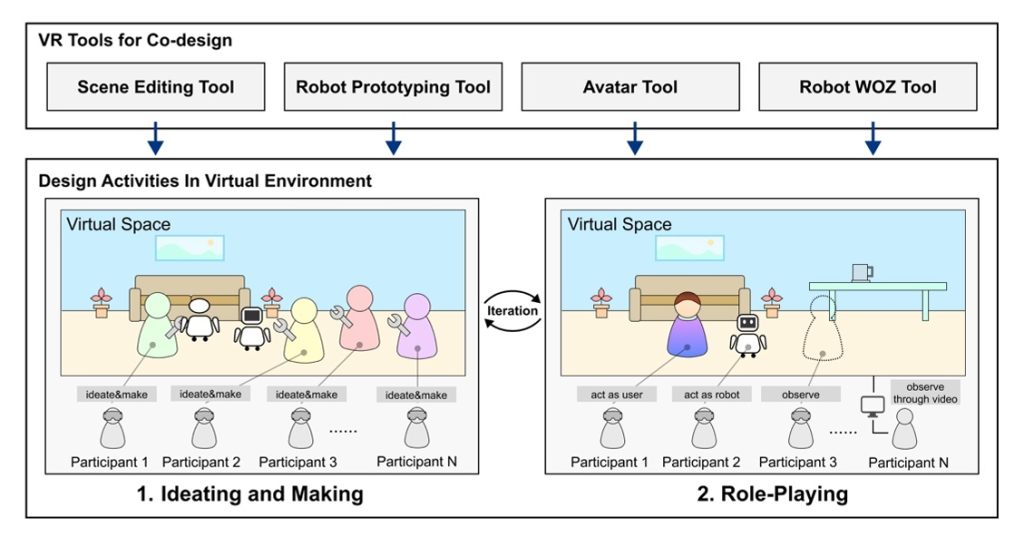 Service robots have been applied in an increasing number of scenarios, including homes, hospitals, offices, schools, hotels, etc. To ensure the usability of the interaction interface and process in the application of service robots, the design of human-robot interaction in the application of service robots involves various interaction modalities, different robot forms, and different physical behaviors of robots in space, etc. This makes it challenging to have low-cost, high-fidelity prototype methods that support design exploration in the early stages of service robot application design.Currently, many rapid prototyping techniques have been applied to the design exploration stage in the design of service robot applications, such as paper prototypes, storyboards, video prototypes, etc. However, these methods have limitations, including low fidelity and being out of the environmental context. Researchers have also been exploring new prototype methods to meet the design exploration and testing requirements for HRI design. Some studies have explored the use of VR test HRI prototypes, and most of them focus on the technical aspect, and the performance of HRI capabilities. Other studies focus on specific HRI design aspects: interactive mechanism, anthropomorphic appearance, social acceptance, and so on. Approaches focusing on these aspects are not suitable for prototyping and testing the overall interaction scenarios of service robot applications.Based on the characteristics of virtual reality technology, this paper aims to explore how virtual reality technology can be used to support multi-user collaborative design of service robot applications in a virtual environment. To address this issue, this paper proposes a system for supporting collaborative design of service robot applications. The system framework and implementation will be described in detail in the paper. Specifically, the system enables multiple users (designers or stakeholders) to enter a virtual environment in real-time using head-mounted VR devices. Users can select appropriate environment model assets based on the target application scenario and perform bodystorming "on site". Using a modular robot building tool, users can add virtual robots to the space and add or delete functional components, as well as adjust the position, size, and orientation of the components. The system's Wizard-of-OZ module allows users to control the robot's movement and component status. The Graphic UI is embedded into the physical display of the robot via WebView and supports the simulation of the Graphic UI interaction process. After completing the initial application concept ideation and virtual robot design, users can use WoZ and Role-Playing techniques to perform the human-robot interaction process to evaluate and optimize the interaction design. In addition, the recorded video of the performance can also support subsequent design discussions.The system is implemented using the Unity game engine, and users interact with the system using the Oculus Quest headsets and controllers. The design activities case based on the system will be evaluated and discussed to analyze the strengths and weaknesses of the system. Further, we discuss the limitations of this work and the future research directions for supporting the design of service robot applications using virtual reality.[......]
继续阅读
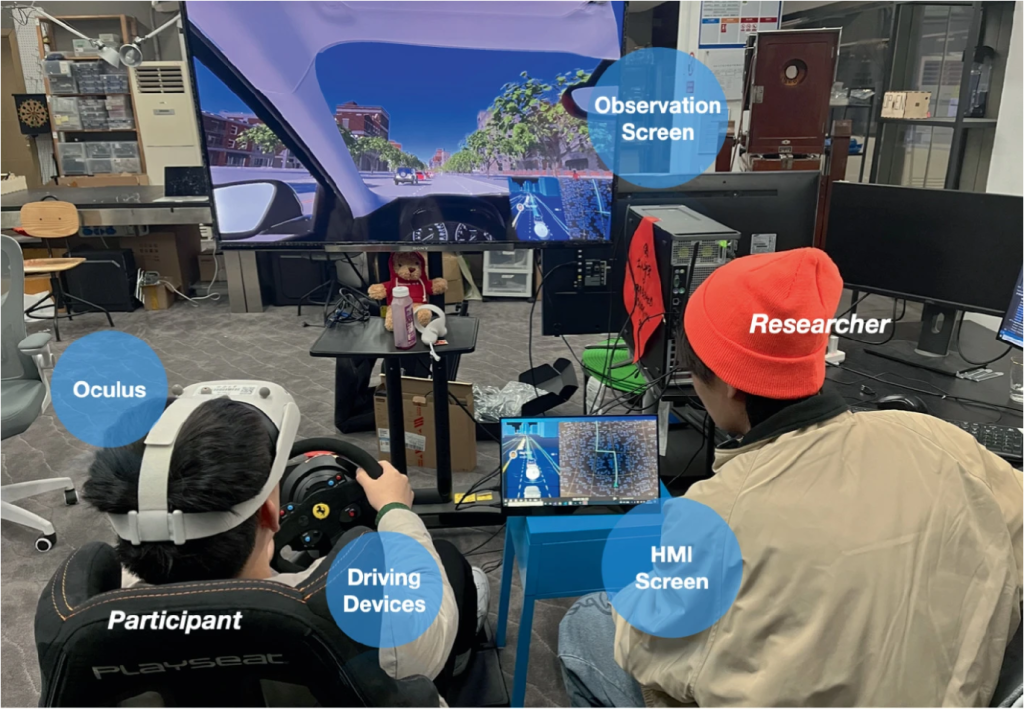 Before widely adopting in the real life, Emerging technologies and design concepts require appropriate user studies to explore demands from users. Smart cockpit is a typical fields driven by cutting-edge technologies, and vehicles are becoming more intelligent touchpoints empowered by V2X technologies. A repeated, correlative and continuous framework was employed for future-oriented user study such as smart cockpit’s connectivity capability in the context of V2X, by presenting the Participatory Design Fictions with Mixed Reality, which aims for stimulating imagination of the participants to gather their views and discussions about the future. Thematic analysis, discourse analysis and creative analysis were adopted to evaluate this framework and method. Results indicated that Participatory Design Fictions with Mixed Reality provided researchers with more in-depth insights about the preferable futures articulated by different groups when conducting future-oriented, demand mining-oriented user study as a effective tool and method.[......]
继续阅读
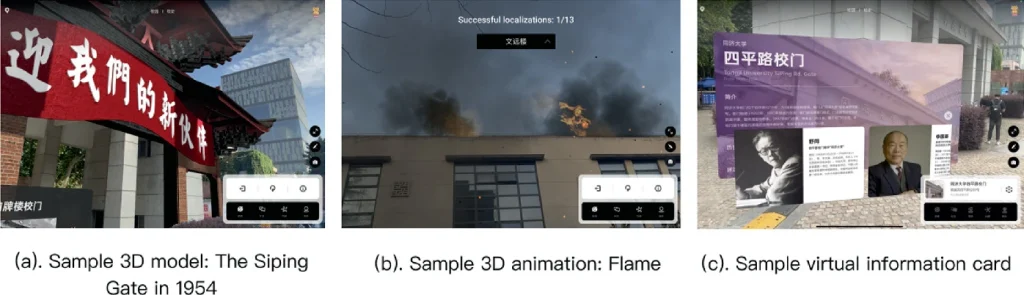 Visualizing the past and engaging learners in real-world learning contexts is important for history learning. Location-based Augmented reality (AR) technologies offer new possibilities for supporting place-based learning, by tracking users’ position and superimposing layers of visual information on the real world. This paper presents a location-based AR application TongSEE that enables users to learn history in authentic context. We describe the design approaches of the interface, physical interaction, and contextual guidance of the application. Twenty participants were evaluated using the application. The results show that, in general, TongSEE is a promising educational tool that helps learners better understand the history and increase their interest in history learning. Our study contributes insights into how location-based AR technologies could be designed to support place-based learning and users’ perspective on this learning method.[......]
继续阅读
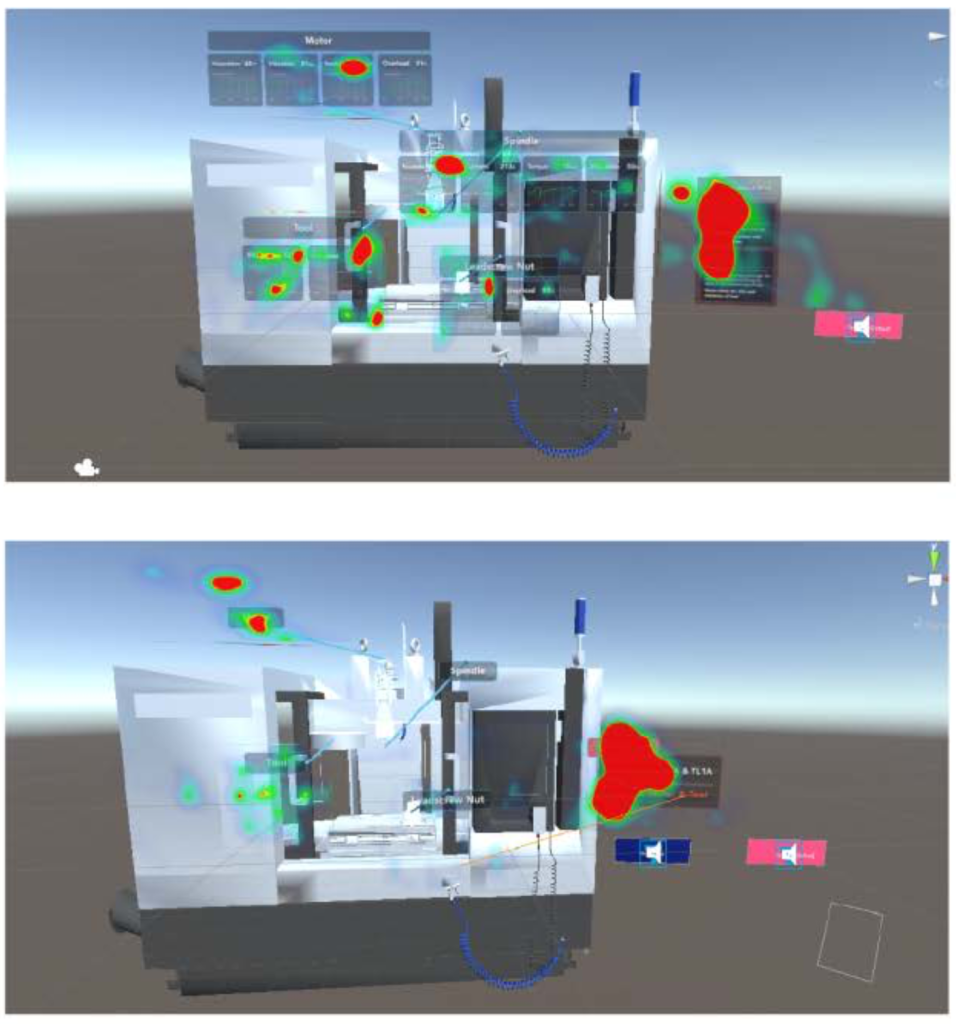 Mixed reality (MR) devices blur the boundaries between the virtual world and reality, reshaping the way people work with assistive information. However, there are still strong lim-for information searching tasks in MR glasses. Added capabilities of HoloLens 2, a recently released MR device, bring new possibilities to deal with these issues. Interactive approaches are proposed in this study, including body/hand-locked components , view-locked navigation components, and view-sensitive information layout. Prototypes were developed with and without these interactive approaches, and user studies were conducted to measure the task performance, usability, and presence. Results show that interactive approaches have positive effect in terms of task completion time. Different cognitive and behavioral styles may lead to distinct preferences for different interactive approaches.[......]
继续阅读