跳到内容
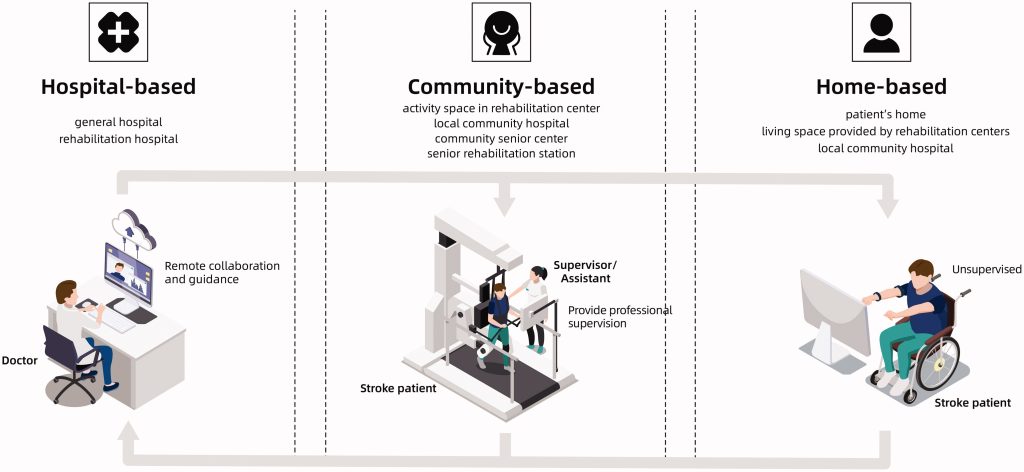 Stroke is a cardiovascular and cerebrovascular disease that affects the aged population at a high rate. Patients’ functional disabilities can be reduced with effective rehabilitation training. However, due to a lack of hospital resources and a social yearning for family contact, patients frequently discontinue rehabilitation training sessions and return home to their local community. Such a shift emphasizes the value of home and community-based rehabilitation, where patients can perform daily training with remote support from therapists. In this survey, the technologies that assist stroke rehabilitation will be discussed in following aspects: (1) technologies for home-based stroke rehabilitation; (2) technologies for community-based stroke rehabilitation; (3) technologies for therapist’s engagement in remote rehabilitation. A comprehensive overview of technologies that support home and community-based stroke rehabilitation was presented, as well as insights into future research themes.[......]
继续阅读
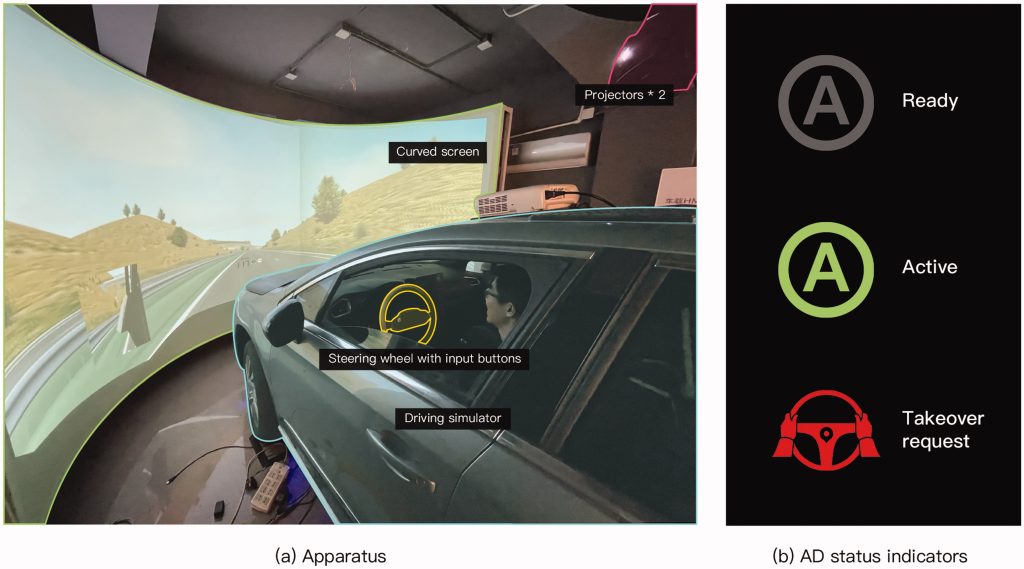 Explanations have become increasingly vital in communicating with human drivers about the reasons for the decision-making of autonomous vehicles (AVs), particularly in tactical-level driving tasks. Focusing on lane-changing scenarios, we examine whether providing tactical-level explanations and in addition, whether providing a confirmation option, influences drivers’ decision-making, trust, and emotional experience. Thirty participants were equally assigned into three groups: indicator (I), explanation (E), and explanation + confirmation (EC), experiencing four lane-changing scenarios in a driving simulator. Real-time question probes and interviews were adopted to understand drivers’ decision-making process, and post-drive questionnaires on trust and emotional experience were given. Results indicated that merely providing tactical-level explanations had little effect on driver’s trust and experience, but caused worse decision-making performance. The option to confirm lane changes after an explanation promoted driver’s trust, but brought two-sided effects on decision-making performance. Situational trust and decision-making performance varied significantly across lane-changing scenarios.[......]
继续阅读
 Benefit from the progress in the field of explainable artificial intelligence (XAI), explanations have been increasingly prospective in the autonomous vehicle (AV) context. Providing explanations has been proved to be vital for human-AV interaction, but what and how to explain are still to be addressed. This study seeks to bridge the areas of XAI and human-AV interaction by combining perspectives of both users and researchers. In this paper, a conceptual framework of explanation models was proposed to indicate what aspects to explain in human-AV interaction. Based on the framework, we introduced a scenario-based and question-driven method, i.e., the SQX-canvas, to guide the workflow of generating explanations from users’ demands in a certain AV scenario. To make an initial validation of the method, a co-design workshop involving researchers and users was conducted with four AV scenarios provided in forms of video clips. Participants produced explanation concepts and expressed their attitudes towards the AV scenarios following the “scenario, question and explanation” process. It was apparent that users’ demands of explanations varied across scenarios, and findings as well as limitations were discussed. This method could provide implications for research and practice on facilitating transparent human-AV interaction.[......]
继续阅读
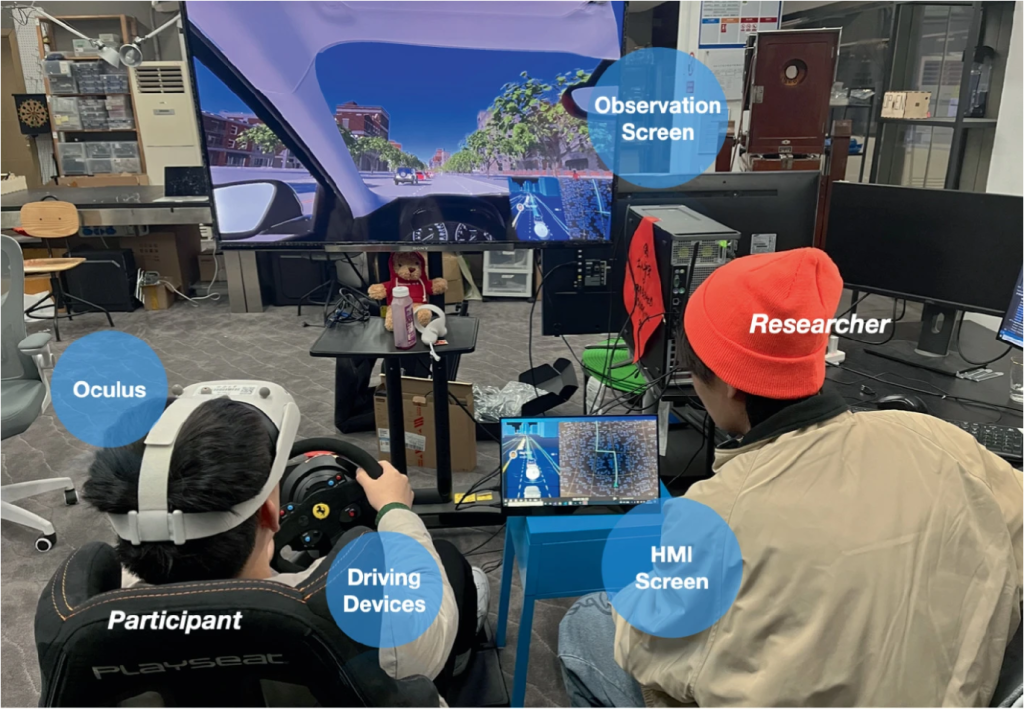 Before widely adopting in the real life, Emerging technologies and design concepts require appropriate user studies to explore demands from users. Smart cockpit is a typical fields driven by cutting-edge technologies, and vehicles are becoming more intelligent touchpoints empowered by V2X technologies. A repeated, correlative and continuous framework was employed for future-oriented user study such as smart cockpit’s connectivity capability in the context of V2X, by presenting the Participatory Design Fictions with Mixed Reality, which aims for stimulating imagination of the participants to gather their views and discussions about the future. Thematic analysis, discourse analysis and creative analysis were adopted to evaluate this framework and method. Results indicated that Participatory Design Fictions with Mixed Reality provided researchers with more in-depth insights about the preferable futures articulated by different groups when conducting future-oriented, demand mining-oriented user study as a effective tool and method.[......]
继续阅读
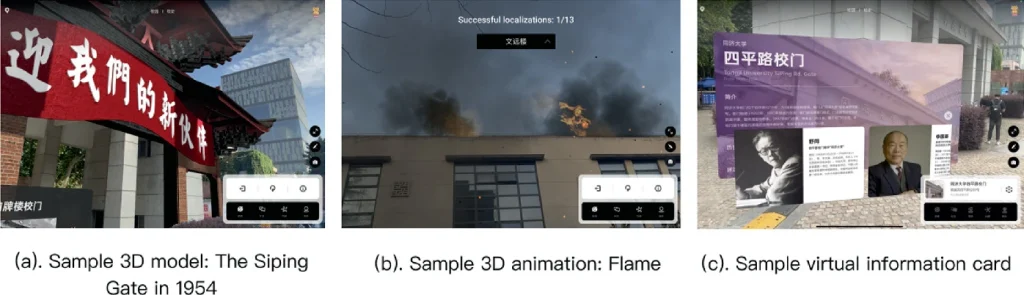 Visualizing the past and engaging learners in real-world learning contexts is important for history learning. Location-based Augmented reality (AR) technologies offer new possibilities for supporting place-based learning, by tracking users’ position and superimposing layers of visual information on the real world. This paper presents a location-based AR application TongSEE that enables users to learn history in authentic context. We describe the design approaches of the interface, physical interaction, and contextual guidance of the application. Twenty participants were evaluated using the application. The results show that, in general, TongSEE is a promising educational tool that helps learners better understand the history and increase their interest in history learning. Our study contributes insights into how location-based AR technologies could be designed to support place-based learning and users’ perspective on this learning method.[......]
继续阅读
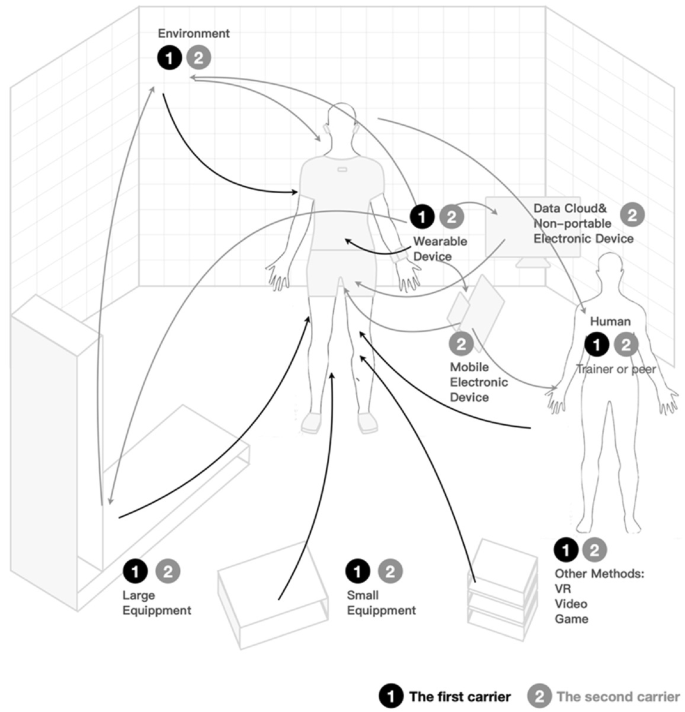 In this article, we focus on fitness workout scenarios. To examine the current practices, we first conducted a substantial user research, through the content analysis procedure we summarized insights regarding fitness purpose, essential data, psychological state, emotional changes and social habits. Subsequently, we generalized related design opportunities of improving the fitness experience and motivation to enhance the fitness performance and communication. Feedback and data representation have great potential to address the challenges, therefore we first proposed a design process for the feedback mode design of fitness workout, including the contextual information, feedback strategy, and realization ways. The feedback designs are implemented on a wearable augmented feedback system ‘FitSleeve’, focusing on individual and group scenarios separately. In group sessions, FitSleeve can demonstrate participants’ experience level, real-time heart rate zone and feedback regarding the correct movement execution. In individual sessions, FitSleeve can display the training progress and provide continuous encouragement. Finally, we evaluated FitSleeve by adopting the System Usability Scale, User Experience Questionnaire, Intrinsic Motivation Inventory and user subjective interviews. The findings indicate the potential of FitSleeve to improve the user experience and motivation of fitness participants.[......]
继续阅读
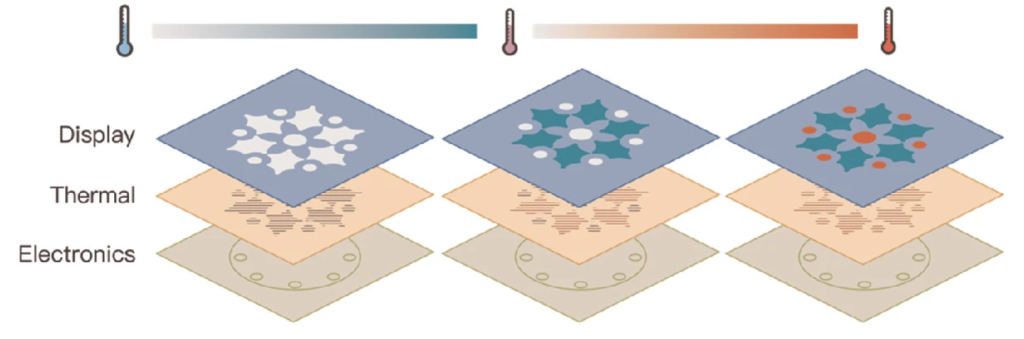 Smart textiles have attracted great attention from Human-Computer Interaction and this study explored how dynamic thermochromic textiles may contribute to the transmission and revitalization of textile Intangible Cultural Heritage (ICH). We proposed Seasons which is an interactive cheongsam developed as a novel exploration in traditional craftsmanship of Shanghai-style cheongsam and smart textiles. Seasons consists of animated visual patterns including 4 stages, new leaves sprout and flowers from buds to full bloom as demonstrations of spring and summer, while leaves turn yellow in autumn and snow comes in winter. Subsequently, we presented the implementation process, feedback from the inheritors of ICH and visitors in the exhibition. In conclusion, we explored how computational thermochromic patterns may enhance the aesthetic and expression in traditional clothing. There is a great design space for thermal-activated smart textiles and this paper is believed to contribute to the future development of smart textile applications for ICH.[......]
继续阅读
 Oracle bone script is an ancient form of writing character used by ancient Chinese. It takes advantage of static pictographic elements to shape scenes, thus conveying dynamic and prosperous messages. The purpose of this study is to demonstrate that scene-based icons inspired by the oracle bone script can be effectively recognized and understood by people from different cultures and thus used to help in cross-cultural communication scenarios. An experiment was conducted with a sample of 16 people from different cultural backgrounds to determine the icons’ recognizability. The result indicates that these icons have relatively high recognizability in a cross-cultural context.[......]
继续阅读
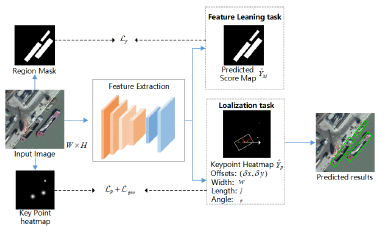 Accurate and efficient ship detection in remote sensing images still remains a challenging task due to the large variations of scales, orientations and distributions. In this paper, we propose an anchor-free ship detector that directly regresses ship localization parameters, offering a simpler pipeline over the previous methods. The detection network is then trained in a multi-task fashion which contains not only the ship center-point maps and oriented bounding boxes but the ship masks. Instead of fixing the weights among the multiple task losses, we adopt a curriculum learning strategy which gradually adapts the loss weights during the training process so that the network can learn the discriminative ship features at the early stage and obtain more localization information while training continues. Experimental results on real dataset demonstrate the effectiveness and efficiency of our proposed method.[......]
继续阅读
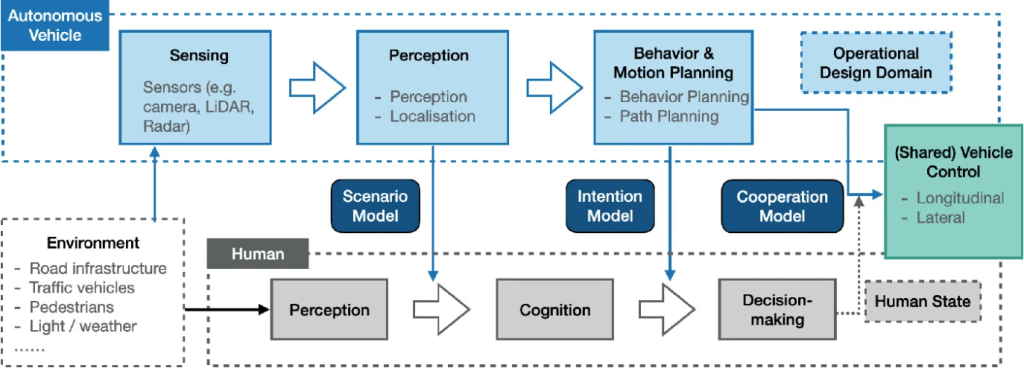
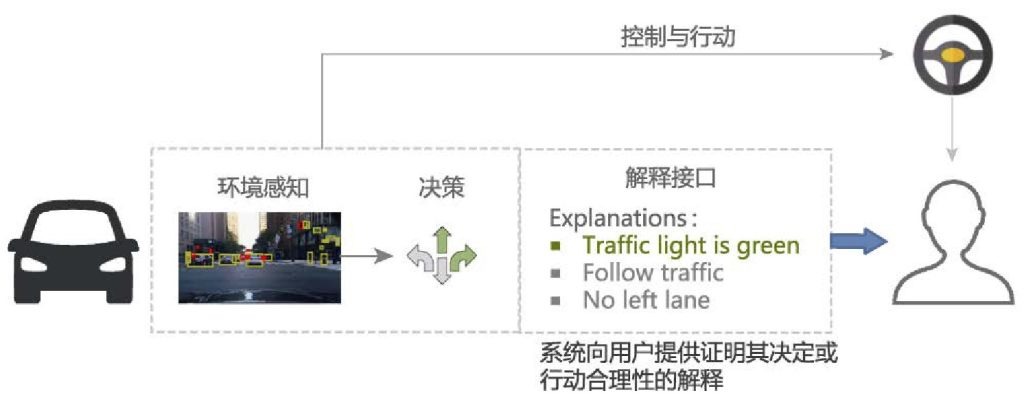 随着现代人工智能技术在自动驾驶系统中的广泛应用, 其可解释性问题日益凸显, 为此探讨人-无人车交互过程中的可解释性交互的框架以及设计要素等问题, 以增强自动驾驶系统的决策透明性, 安全性和用户信任度. 结合可解释人工智能和人机交互的基本理论与方法, 本文首先介绍了可解释性人工智能, 对当前可解释内容的提取方法进行总结, 然后以人-机器人交互的透明度模型为基础, 建立人-无人车交互中可解释性交互的框架. 最后从解释的对象, 方式和评价等多个设计维度对可解释性的交互设计问题进行探讨, 并结合案例进行分析. 可解释性作为人与模型决策之间的接口, 不仅仅是一个人工智能技术问题, 而且与人密切相关, 涉及到人-无人车交互中的多个层次. 本文提出人-无人车交互中可解释性交互的框架, 得出在人-无人车交互每个阶段需要的解释内容以及可解释交互设计的要素.[......]
继续阅读