Towards Scenario-Based and Question-Driven Explanations in Autonomous Vehicles
Yiwen Zhang , Weiwei Guo, Cheng Chi, Lu Hou, and Xiaohua Sun
International Conference on Human-Computer Interaction (2022)
摘要/Abstract
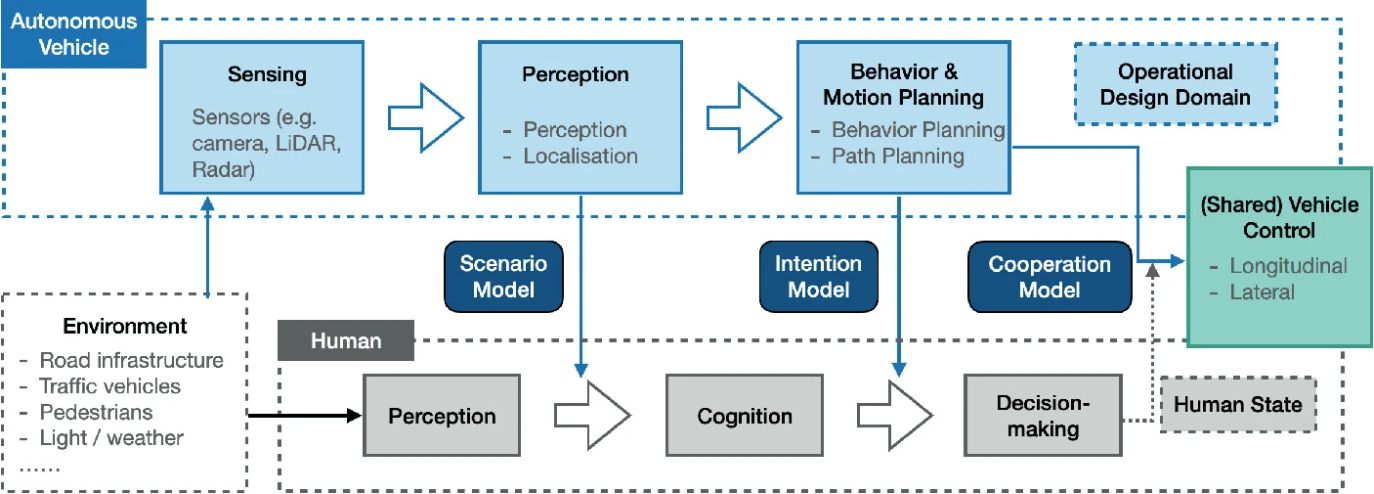
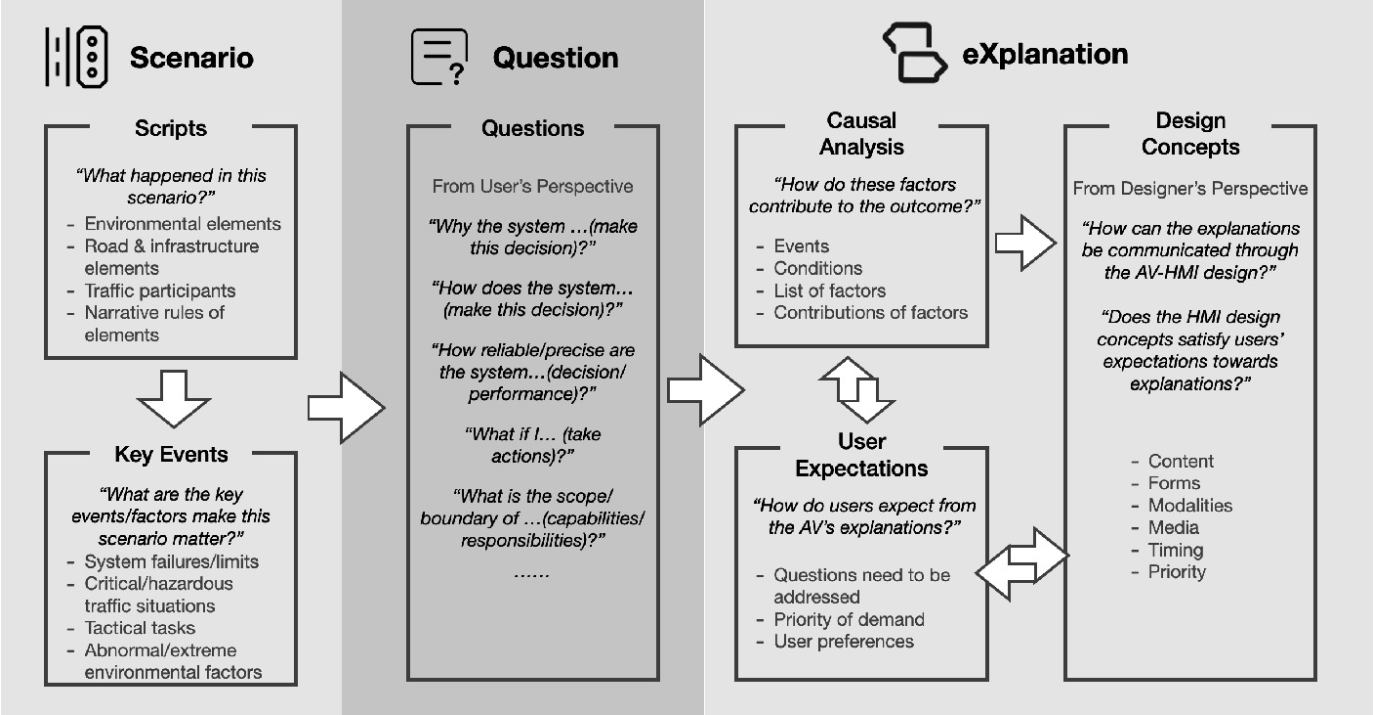
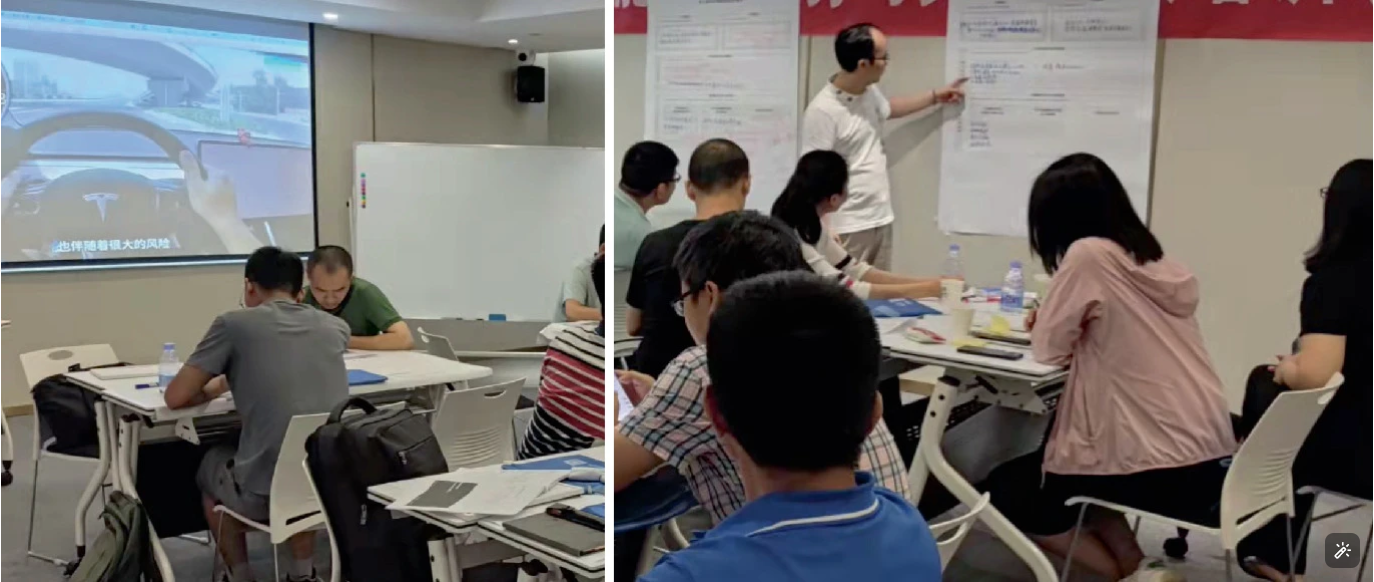
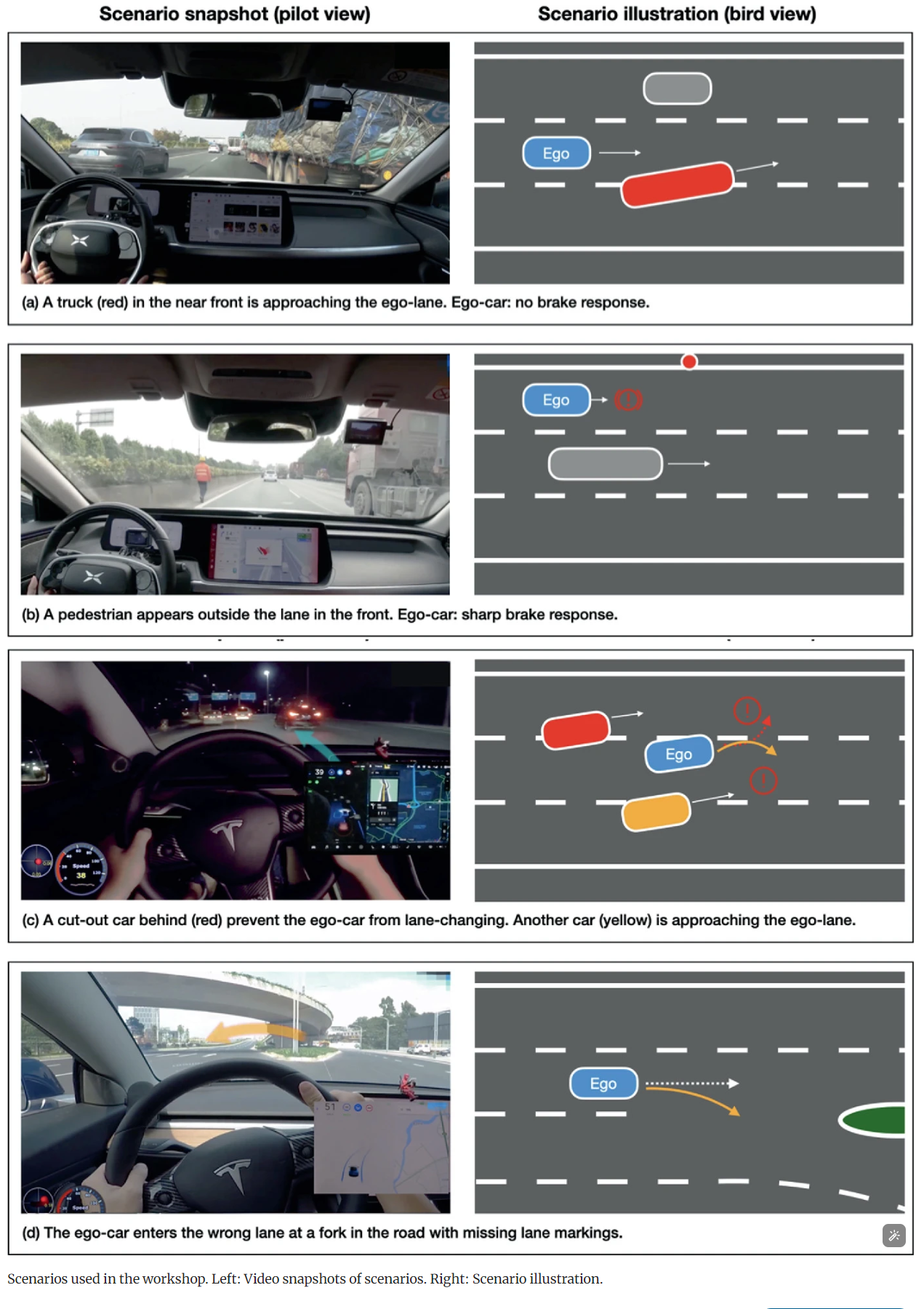
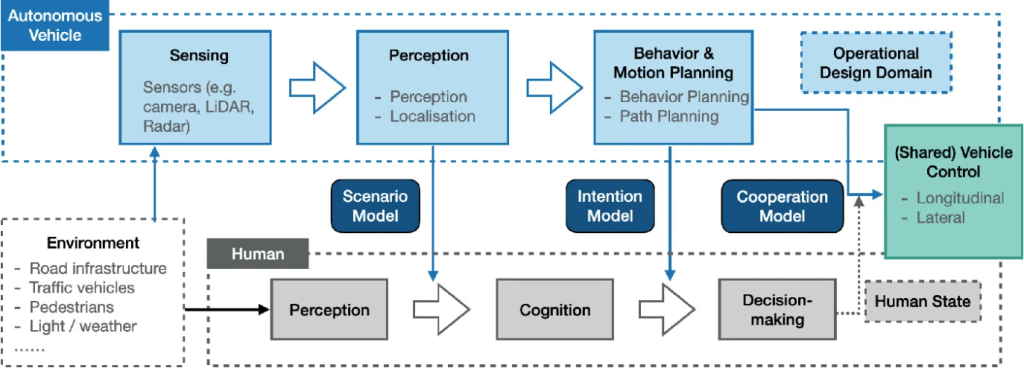
受益于可解释人工智能 (XAI) 领域的进步,解释在自动驾驶汽车 (AV) 环境中越来越具有前瞻性。事实证明,提供解释对于人机交互至关重要,但解释什么以及如何解释仍有待解决。本研究旨在通过结合用户和研究人员的观点,在 XAI 和人机交互领域之间架起桥梁。在本文中,提出了一个解释模型的概念框架,以指示在 Human-AV 交互中需要解释哪些方面。基于该框架,我们引入了一种基于场景和问题驱动的方法,即 SQX-canvas,以指导在某个 AV 场景中根据用户需求生成解释的工作流程。为了对该方法进行初步验证,我们举办了一次涉及研究人员和用户的共同设计研讨会,以视频剪辑的形式提供了四个 AV 场景。参与者按照 “情景、问题和解释” 过程提出了解释概念并表达了他们对 AV 场景的态度。很明显,用户对解释的需求因场景而异,并讨论了发现和局限性。这种方法可以为促进透明的人机交互的研究和实践提供启示。
Benefit from the progress in the field of explainable artificial intelligence (XAI), explanations have been increasingly prospective in the autonomous vehicle (AV) context. Providing explanations has been proved to be vital for human-AV interaction, but what and how to explain are still to be addressed. This study seeks to bridge the areas of XAI and human-AV interaction by combining perspectives of both users and researchers. In this paper, a conceptual framework of explanation models was proposed to indicate what aspects to explain in human-AV interaction. Based on the framework, we introduced a scenario-based and question-driven method, i.e., the SQX-canvas, to guide the workflow of generating explanations from users’ demands in a certain AV scenario. To make an initial validation of the method, a co-design workshop involving researchers and users was conducted with four AV scenarios provided in forms of video clips. Participants produced explanation concepts and expressed their attitudes towards the AV scenarios following the “scenario, question and explanation” process. It was apparent that users’ demands of explanations varied across scenarios, and findings as well as limitations were discussed. This method could provide implications for research and practice on facilitating transparent human-AV interaction.
相关信息/Info
作者/Authors
链接/Link
Yiwen Zhang , Weiwei Guo, Cheng Chi, Lu Hou, and Xiaohua Sun
https://link.springer.com/chapter/10.1007/978-3-031-04987-3_7